

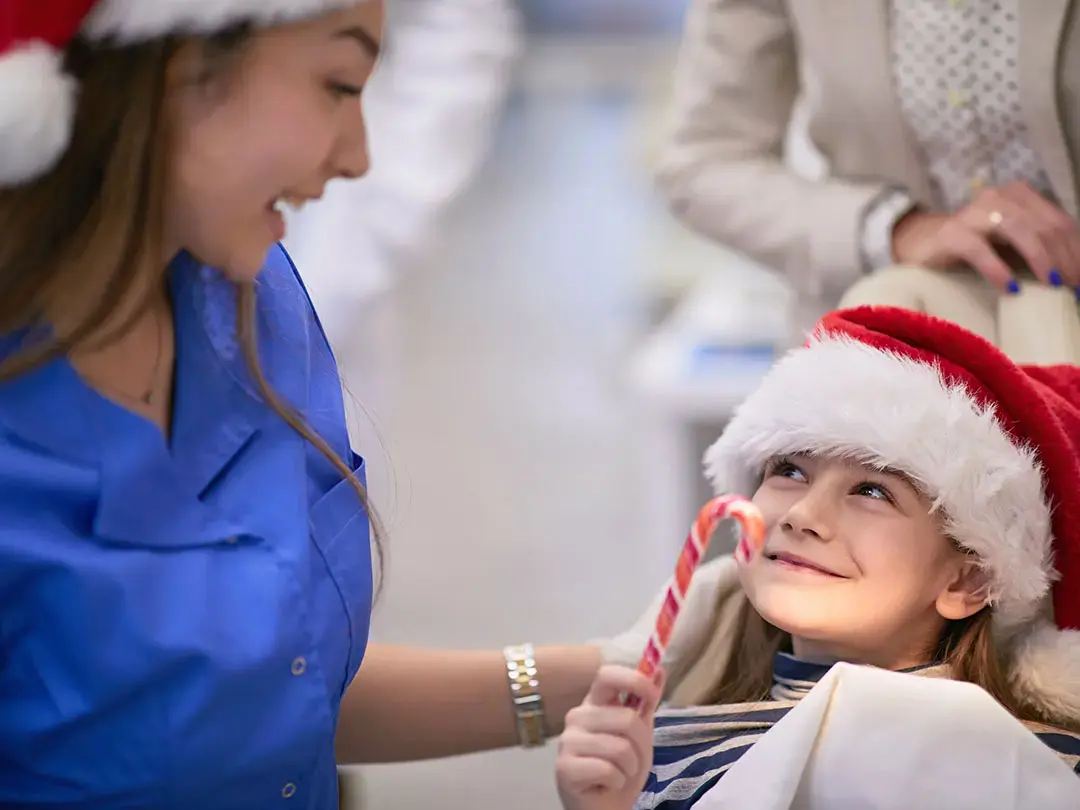
The holiday season is a time when families and loved ones reunite. Though many festivities involve mouth-watering holiday foods, much of the time they are eaten on the go or in one jam-packed sitting. If you happen to bite your tongue or the inside of your mouth while chomping on a particularly hard morsel, lose a dental crown while traveling, or experience a sudden severe toothache while out of town, your celebration could quickly be brought to a grinding halt. But how do you handle such dental emergencies during your holidays?
At Montville Dental Studio, we recognize that dental emergencies rarely occur at convenient times. As a family dentist serving Montville, NJ, we provide emergency dental evaluations and treatment for patients experiencing tooth pain, damaged restorations, and other urgent oral health concerns. We encourage patients to recognize the warning signs of dental emergencies and seek appropriate care rather than postponing treatment until after the holidays.
Why Are Dental Emergencies More Common During the Holidays?
Holiday activities, temporary eating habits, crowded daily routines, and casual amusements can all bring about dental trauma. A tooth holding a filling, for example, can suffer severe damage when subjected to unexpected tooth stress caused by a hard candy, a handful of nuts, popcorn, or other hard, crunchy objects.
Sticky foods, such as caramel, may dislodge older fillings. Foods containing sugar that patients eat throughout the day may cause sensitivity to cavities or exposed surfaces.
When pain strikes, your patients may be away from your dental practice. While eating on holiday does not cause long-term dental problems, it can, however, expose problems with teeth or dental work already in place.
It is wise to pay attention to changes in dental comfort before the holiday season. An occasional ache in a tooth while chewing or extreme sensitivity to temperature may need to be checked before it causes more problems.
What Should You Do If You Crack or Break a Tooth?
Tooth cracking or breaking can happen at any time, especially during holiday eating. A weak tooth can break or even crack, thereby damaging a filling or even cracking through to the dental nerve(s) below.
How to Respond Immediately to a Broken Tooth
If you break a tooth, rinse your mouth gently with warm water and clean out any debris. If there is bleeding, use clean gauze to apply gentle pressure. To reduce swelling and pain, use a cold compress against the outside of your cheek.
Please avoid chewing on the affected side and extreme hot, cold, or hard foods until we can examine the tooth.
Even a small part of a tooth can be stored in a safe place and brought to the dental appointment. The dentist can then use this information in respect to the extent of the dental problem.
Which Dental Treatments Can Repair a Broken Tooth?
Treatment for tooth fractures depends on the size and location of the fracture. Small chips may be repaired with dental bonding material. Larger fractures may require a crown to give sufficient strength to the tooth.
If a crack extends into the tooth’s pulp, root canal therapy may be necessary. Teeth with severe fractures extending below the gumline sometimes cannot be preserved.
Evaluation of the tooth involved in the dental emergency, review of relevant dental images as needed, and discussion of the various treatment alternatives for the emergency situation.
What Happens If a Dental Crown or Filling Falls Out?
Dental crowns and fillings can become loose over time because of wear and tear, new decay, or changes to the inside of the tooth.
A lost crown can expose sensitive surfaces of the teeth and make chewing painful. A fallen filling can expose additional surfaces of the tooth, which can be damaged even more.
A dislodged crown should be placed in a clean container, and the patient should contact our office for further instructions. Permanently attaching a crown with household adhesives is not recommended. Such materials can be very destructive to the oral tissues and cause problems that require professional correction.
Temporary dental cement can be used to provide a temporary fix for a crown that has come loose until you are able to get to a dentist. It must be used in accordance with the manufacturer’s instructions and for a crown that still fits well.
A lost restoration should be evaluated to see if the tooth under the restoration can be restored with a new crown or filling or if more restoration is needed.
When Does a Holiday Toothache Require Immediate Attention?
Toothache pain does not always mean you have a serious dental problem. However, pain that lasts or worsens is something to pay attention to. Tooth discomfort can be caused by a variety of dental problems, such as tooth decay, cracked teeth, gum infections, exposed roots, and dental pulp inflammation.
Recognizing Warning Signs of a Serious Dental Problem
Dental pain that interferes with sleep, increases in intensity, and is accompanied by swelling needs to be addressed quickly by a dentist.
Additional signs of tooth decay include a sharp pain while eating extremely hot or cold foods for longer than normal, pain while biting, and swelling of a single tooth.
Facial swelling, fever, difficulty swallowing, or pain that becomes worse can indicate that a dental infection has spread. Increasing difficulty breathing or swallowing, or a spreading swelling that occurs rapidly, is an emergency that requires immediate attention.
Please contact your dental provider as soon as you are experiencing dental symptoms instead of letting them hang on through a holiday weekend with dental pain.
How Can You Manage Tooth Pain Before Your Appointment?
While waiting for professional evaluation, patients may find temporary relief by rinsing gently with warm salt water and avoiding foods that aggravate the affected tooth.
Over-the-counter pain medications can be used as directed on the label, with consideration for individual medical needs. Aspirin must not be placed directly on the gums, as it will cause chemical burns to the gum tissue.
While some relief may be experienced for a short period of time, no measure can ever fill a cavity, repair a tooth, or cure an infection.
What Should You Do If a Permanent Tooth Gets Knocked Out?
A knocked-out permanent tooth requires immediate attention because the chance of successful reimplantation decreases as time passes.
We recommend picking up the tooth by the crown (the part that was in the mouth) rather than the root (the part that was in the socket). Clean the tooth with saline solution or milk before placing it back in the mouth, but do not scrub it. For an adult permanent tooth, it is often possible to place it back in the socket gently without using force.
Place the tooth in milk or an appropriate tooth preservation solution and go straight to an emergency dental surgery for treatment as soon as possible, ideally within 30 minutes.
A knocked-out baby tooth should never be reinserted because doing so may damage the developing permanent tooth underneath.
Even if you feel pain, it is best to contact an emergency dentist immediately after any dental trauma.
How Can Families Prevent Dental Emergencies During Holiday Celebrations?
Preventing holiday dental injuries starts with knowing what to watch out for and brushing teeth regularly.
No attempts to use your teeth to crack open nuts. No chewing on ice. No biting into extremely hard candies. People with dental crowns, fillings of large size, or previously damaged teeth should use even more caution when consuming foods that require strong chewing.
Brushing and flossing teeth on a regular basis is very important even during holidays. A change in daily routines should not interfere with proper oral hygiene.
Individuals with recurring sensitivity, discomfort while chewing, or existing restoration problems may benefit from an examination prior to their trip.
As a family dental practice, we also encourage parents to monitor children’s activities involving hard candy, recreational sports, and other situations where accidental dental injuries may occur.
Why Is Prompt Emergency Dental Treatment Important?
Waiting too long can result in problems worsening; for example, when there is an infection, there is structural damage, or the surface of the tooth is exposed.
A small crack will grow with chewing. An untreated problem can spread. A missing tooth restoration leaves a tooth weakened and subject to further damage.
Dental emergencies are approached by determining the cause of pain or discomfort and by determining the best course of treatment for the affected tooth.
Treatment for tooth wear may include dental bonding, fillings, crowns, or even root canal treatment, depending on the clinical findings.
Our main goal is to relieve your pain, to protect the part of the tooth left, and to return you to full oral function with proper post-operative care.
Frequently Asked Questions
Can a Family Dentist Treat Dental Emergencies During the Holidays?
Yes. A family dentist may provide emergency evaluations and treatment for toothaches, broken teeth, lost fillings, and damaged crowns. Availability depends on office hours and scheduling. At Montville Dental Studio, we accommodate same-day emergency appointments whenever possible and encourage patients to call promptly when urgent dental symptoms develop.
What Should I Do If My Tooth Breaks During Thanksgiving Dinner?
Gently rinse your mouth with warm water and avoid biting down on the damaged tooth. Swelling can occur quickly, so use a cold compress and contact a dental professional as soon as possible. Your dentist can use dental bonding, crowns, or other treatments to repair the damaged tooth, depending on the extent of the fracture.
Is a Lost Dental Crown Considered a Dental Emergency?
Note that not all lost crowns require immediate evaluation, but delayed evaluation can lead to additional problems with a tooth/teeth. Keep the crown, avoid using the affected side of the mouth, and contact the dentist for further instructions.
How Can I Find Emergency Dental Care in Montville, NJ?
Patients experiencing urgent dental problems should contact a local dental practice that provides emergency evaluations. Montville Dental Studio offers emergency dental services and attempts to accommodate same-day appointments when scheduling permits. If symptoms involve severe facial swelling, uncontrolled bleeding, or difficulty breathing or swallowing, immediate medical attention may be necessary.
Protect Your Family’s Oral Health During the Holiday Season
Dental problems on holidays can quickly ruin any celebrations. Most dental problems can be prevented by recognizing early warning signs and acting quickly. Whether it is a cracked tooth, a sudden toothache, chipping of a dental restoration, or something else, a prompt dental checkup will allow for the most suitable treatment to prevent further harm.
At Montville Dental Studio, we are committed to providing dependable preventive, restorative, and emergency dental care. As a family dentist serving Montville, NJ, we help patients of all ages address unexpected dental problems and maintain healthy smiles throughout the year. If you experience a dental emergency or want to address an existing concern before your holiday celebrations, call us at 973-575-6100 to schedule an appointment. We are here to evaluate your dental needs, explain your treatment options, and help you protect your smile during the holidays and beyond.